



AI Coding Agents Similar to Devin (Cognition): Real Alternatives
What Makes Devin Different From Traditional AI Coding Tools
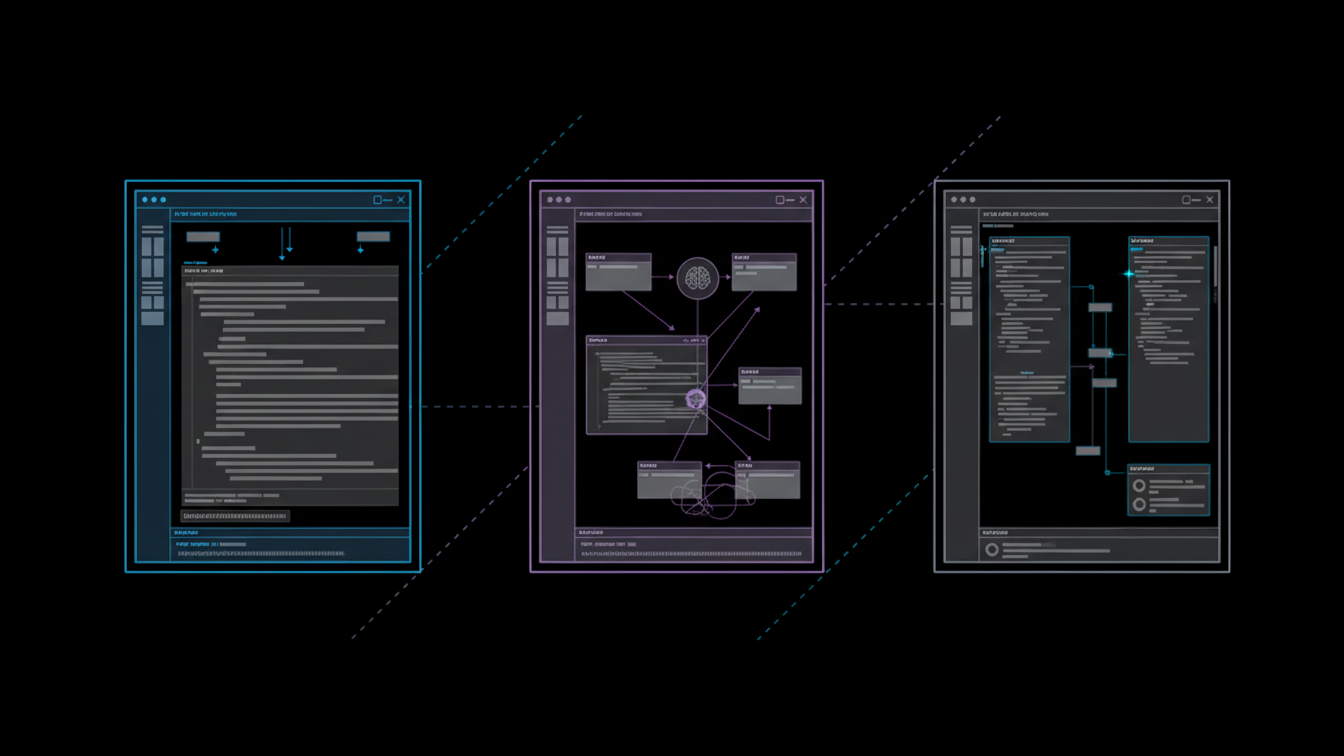
Devin is not just an autocomplete system or an AI pair programmer. Its core differentiation comes from three characteristics.
First, Devin operates with task-level autonomy. Instead of responding to prompts, it decomposes objectives into steps, executes them sequentially, and validates results.
Second, it maintains persistent context across files, commands, tests, and iterations. It behaves more like a junior engineer than a coding assistant.
Third, Devin can interact with development environments beyond the editor, including terminals, build systems, test suites, and deployment workflows.
Any tool described as similar to Devin needs to meet at least part of this bar.
The Reality of Devin Alternatives
Most tools labeled as AI coding agents fall into one of three categories.
Copilot-style assistants with limited agent features.
Semi-agentic systems embedded in IDEs.
Fully autonomous agents that trade safety and control for independence.
Understanding this distinction is key before comparing tools.
Real AI Coding Agents Comparable to Devin
Cursor Agent is one of the closest practical alternatives to Devin for most engineering teams.
It operates directly inside the IDE and can reason across multiple files, propose architectural changes, and execute multi-step tasks. While it does not fully replace a developer, it excels at coordinated refactors, feature scaffolding, and codebase-wide updates.
The main difference compared to Devin is control. Cursor keeps humans in the loop by design, which makes it safer and easier to adopt in production environments.
Best fit includes product teams, SaaS companies, and developers who want autonomy without losing oversight.
Windsurf positions itself as an AI-native development environment rather than an add-on.
Its agent capabilities focus on maintaining shared context across the project and enabling long-running tasks that span files, tests, and logic layers. Windsurf feels closer to an operating system for AI-assisted development than a simple editor.
Compared to Devin, Windsurf emphasizes collaboration between humans and agents rather than full autonomy. This makes it more realistic for teams shipping continuously.
Best fit includes teams adopting agentic workflows incrementally, organizations focused on speed and iteration, and developers working across full-stack systems.
OpenHands is an open-source autonomous agent framework designed to execute software tasks with minimal supervision.
It can run commands, modify files, debug failures, and iterate until a task is complete. In terms of autonomy, it is one of the closest conceptual matches to Devin.
However, this flexibility comes with higher setup complexity and fewer guardrails. It behaves more like an experimental AI engineer than a production-ready teammate.
Best fit includes research teams, advanced users, and organizations exploring autonomous development systems.
Devin Compared With IDE-Based Agentic Tools
While Devin aims to replace entire development cycles, most successful alternatives take a different approach.
Instead of removing developers from the loop, tools like Cursor Agent and Windsurf amplify developers by handling coordination, context retention, and repetitive execution.
This difference explains why many teams searching for AI coding agents similar to Devin ultimately adopt IDE-based agents rather than fully autonomous systems.
Tools That Are Not Truly Comparable to Devin
Several popular tools are often mentioned alongside Devin but do not meet the same criteria.
GitHub Copilot, even with agent features, remains prompt-driven.
JetBrains AI focuses on augmentation rather than autonomy.
Chat-based coding tools lack persistent execution context.
These tools are powerful, but they are not substitutes for agentic workflows.
How to Choose a Devin Alternative
The right choice depends less on raw autonomy and more on how your team builds software.
If you want maximum independence and experimentation, autonomous agents like OpenHands come closest.
If you want production-ready agentic workflows inside real projects, Cursor Agent and Windsurf offer a strong balance between power and control.
If you are evaluating Devin itself, the key question is not whether it can code, but whether your organization is ready to trust an AI with end-to-end ownership.
The rise of Devin pushed the industry to rethink what AI-driven development actually means. In practice, the most successful alternatives are not those that eliminate developers, but those that restructure how developers work with intelligent agents.
As agentic systems mature, the gap between AI assistant and AI teammate continues to narrow. Understanding where each tool truly sits on that spectrum is what separates hype from real productivity gains.