



AI Is Rewiring Software: Careers, Agents-as-Filesystems, and the Data Poisoning Threat

NEWSLETTER | Amplifi Labs
AI Is Rewiring Software Careers: Five Scenarios to Plan For
Around the web • January 11, 2026
A strategic analysis outlines five forks likely to shape engineering through 2026: AI’s impact on junior hiring, shifting skill demands, the auditor-vs-orchestrator role split, the rise of T‑shaped careers, and modular education paths. With 84% of developers using AI and studies showing 9–10% short-term drops in junior roles post-AI adoption (despite ~15% BLS growth forecasts), the takeaway is clear: teams will move to AI-native workflows while humans double down on architecture, security, systems thinking, and cross-domain breadth. Action items span both ladders—get fluent with AI agents, strengthen fundamentals, and cultivate one or two deep specialties atop broad adaptability.
AI Engineering in Practice
Redis creator: LLMs now ship code; developers must adapt fast
Around the web •January 11, 2026
Redis creator Salvatore Sanfilippo argues state‑of‑the‑art LLMs can now deliver medium‑size projects with minimal guidance, shifting developer value from typing code to problem framing and review. In a single week using Claude Code he added UTF-8 support and a terminal test framework to linenoise, fixed flaky Redis tests, reproduced Redis Streams internals from a design doc, and generated a 700‑line pure‑C BERT embedding library matching PyTorch outputs at ~15% slower. He urges engineers to adopt AI seriously while warning about centralization, advocating open models, and calling for policy support as automation impacts jobs.
Claude Code and Tailscale make home self-hosting a weekend project
Around the web •January 11, 2026
Running Claude Code directly on an Ubuntu 22.04 LTS mini PC (e.g., Beelink N150) alongside Tailscale lets you automate Docker/Compose, Caddy reverse proxy, persistence, security hardening, monitoring, and service restarts without deep sysadmin work. The author deployed Vaultwarden, Immich, Plex, Home Assistant, Uptime Kuma, and Readeck in containers, generated a Go/Svelte monitoring dashboard, and set up local USB plus S3 Glacier Deep backups. Takeaway: AI-driven CLI agents now reliably handle routine infra tasks, making privacy-focused self-hosting practical for terminal-comfortable developers.
Agent & Workflow Tooling
FUSE turns any backend into an agent-friendly filesystem
Around the web •January 11, 2026
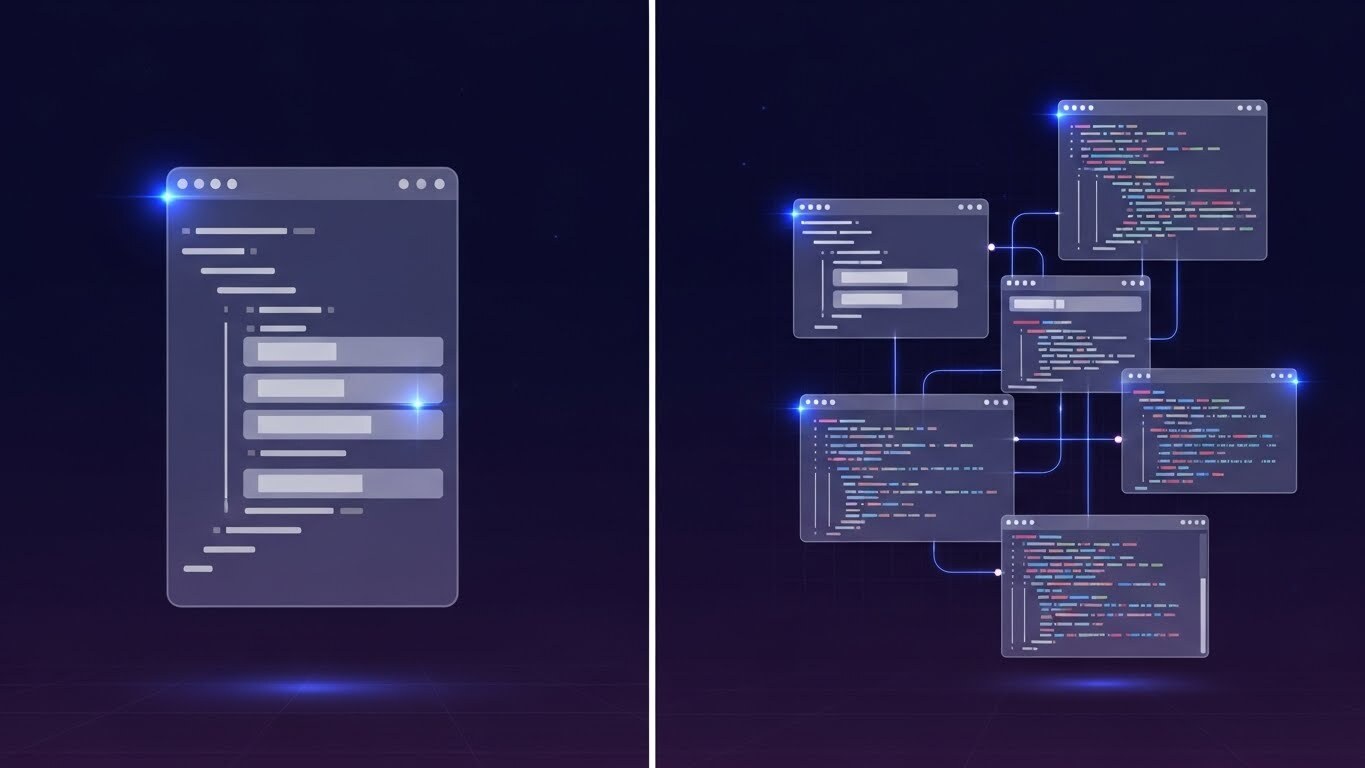
A practical pattern shows how to use FUSE to expose live backend data as a mounted filesystem inside agent sandboxes, letting agents rely on ls/grep/mv instead of bespoke tools while avoiding snapshot and sync headaches. A TypeScript implementation with fuse-native maps an email app’s DB to folders and .eml files, adds virtual folders via symlinks, and plugs into Anthropic’s Agent SDK; the demo runs in Docker and is open-sourced. For developers building agents, this reduces tool surface area, supports progressive disclosure and long-context via files, and points toward future provider APIs that abstract FUSE away.
Penpot Pilots MCP Servers for AI-Driven Bidirectional Design-Code Workflows
Smashing Magazine •January 8, 2026
Penpot is piloting MCP servers that let LLM clients read and write Penpot design files to automate design-to-code and code-to-design workflows, generate documentation, scaffold Storybook projects, and produce token-aware HTML/CSS, while keeping project data within your stack. The LLM-agnostic setup works with tools like Claude Desktop, VS Code, and JetBrains; demos also cover validation, accessibility checks, natural-language search, and design system compliance. Penpot is seeking beta testers to help shape the API and use cases.
Design, Product & UX in the Age of AI
Humanizing AI Backfires: Prioritize Utility Over Personality in LLMs
Nielsen Norman Group •January 9, 2026
The article argues that anthropomorphizing LLMs—through personas, emotional language, and chatty UX—raises error rates (10–30%), reduces reliability (12–14% drops with “warmth” prompts), and inflates user expectations the models can’t meet. For product and engineering teams, design tool-like agents: constrain prompts to curb sycophancy, strip filler and first‑person pleasantries, avoid “thinking” metaphors, and optimize for accuracy and task completion over engagement—unless the use case is explicitly relational. It also highlights privacy/compliance risks from overtrust and notes current agents’ ~50% reliability on long tasks, reinforcing the case against building fake friends.
The Empowerment Myth: Why Scale Breaks Product Teams—and How to Respond
Nielsen Norman Group •January 9, 2026
Many so‑called “empowered” product teams lose autonomy at scale due to shared systems, cross‑team dependencies, and executive demands for roadmap certainty—resulting in fractured UX and PMs acting as coordinators instead of strategists. The piece outlines pragmatic ways to regain agency without chaos: adopt journey‑centric management, minimize dependencies, build cross‑team relationships early, align metrics to broader outcomes, document decisions, think in systems, and earn trust by consistently shipping.
Developer Tools & Infrastructure
Fossil vs Git: SQLite-backed, Integrated, Portable, Test-First DVCS
Around the web •January 12, 2026
Fossil contrasts itself with Git by packaging version control, wiki, tickets, docs, forum, and chat into a single, self-contained binary with a web UI and RBAC, storing all data in SQLite for powerful, queryable history and timelines. It promotes a cathedral-style, test-before-commit workflow with autosync, many checkouts per repo, immutable history (no rebase/squash), and SHA-3 with SHA-1 compatibility, making self-hosting lighter than Git plus third-party tools. For small-to-medium teams and Windows-heavy environments, Fossil offers an integrated alternative, while large, decentralized projects may still favor Git’s bazaar-optimized model.
New Go Katas Teach Idiomatic, Prod-Ready Patterns for Senior Devs
Around the web •January 7, 2026
An open-source “Go Katas” repo offers daily, production-grade exercises to help experienced engineers adopt idiomatic Go. The curated set drills context-aware, fail-fast concurrency; allocation-sensitive performance (e.g., zero-allocation JSON, sync.Pool); HTTP/middleware hygiene; robust error semantics; filesystem packaging; and modern testing (subtests, parallel, fuzz). Each kata defines constraints and required idioms with reference implementations, accelerating onboarding to Go and avoiding pitfalls like goroutine leaks, backpressure issues, and typed-nil errors.
Security & Data Integrity
Poison Fountain Publishes Endless Stream to Poison LLM Training Data
Around the web •January 11, 2026
A manifesto-style post urges website operators to degrade AI models by directing web crawlers to a continuously generated supply of poisoned text. If adopted, these tactics could contaminate training corpora at scale, raising the stakes for data provenance, crawler allowlisting, robust content validation, and adversarial data defenses in AI pipelines.