



Edge AI Goes Offline; Agents Get Real; Age‑Verification’s Surveillance Problem
NEWSLETTER | Amplifi Labs
Age-Verification Mandates Are Building a Global Biometric Surveillance Stack
Around the web • April 6, 2026
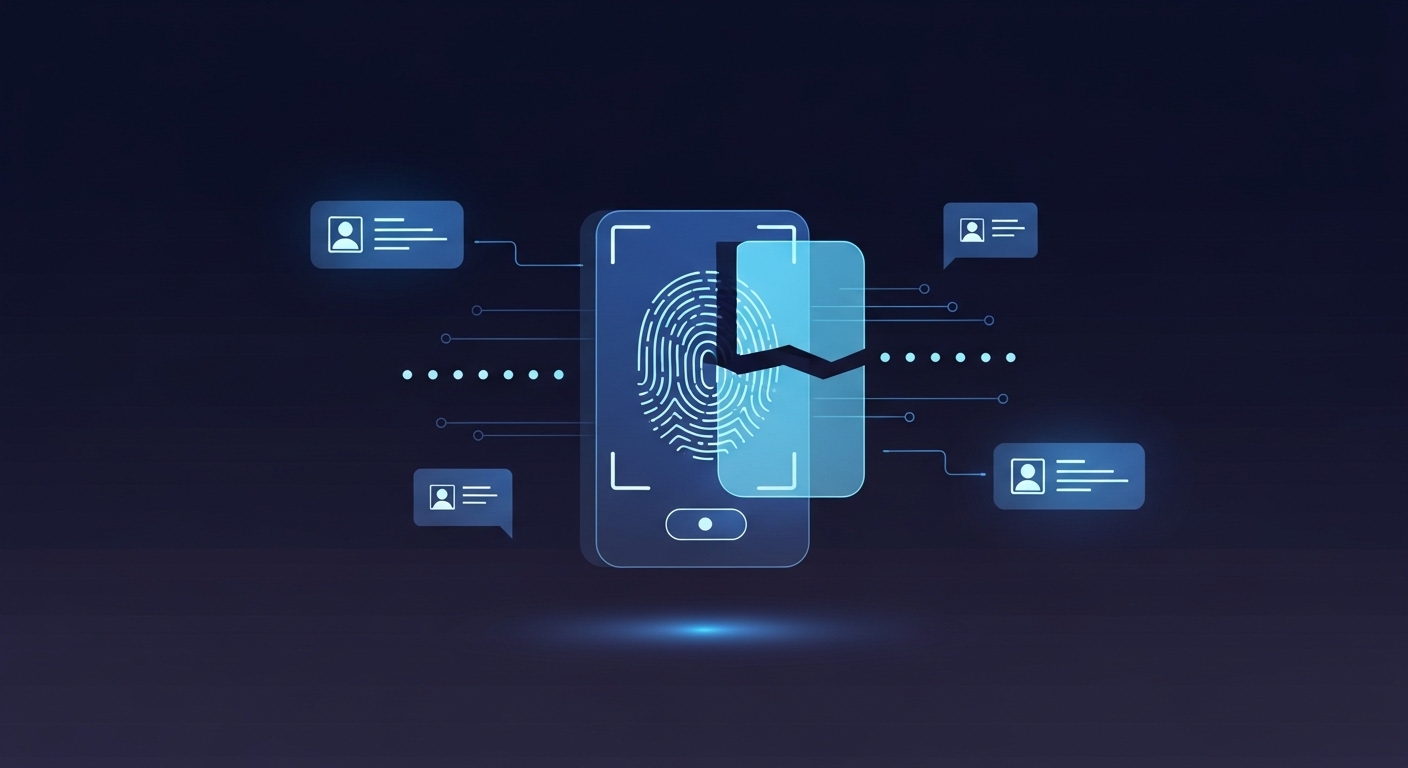
An OSINT investigation claims age-verification laws in the US, UK, and Brazil are building a cross-border identity stack that doubles as biometric surveillance, linking a surveillance-analytics firm and an IDV vendor via a common investor and positioning identity as a prerequisite for AI agents and online transactions. Leaked Persona code and SDK analysis report 269 verification checks and government reporting modules (FinCEN/FINTRAC), multi-year biometric/device lists, seven analytics SDKs, and security gaps including no certificate pinning and a previously hardcoded AES telemetry key (rotated in v1.15.3), plus silent carrier auth, WebRTC selfie streaming, and NFC passport reading. For developers integrating age assurance, the piece highlights significant supply-chain, privacy, and compliance risk; scrutinize vendor subprocessors/AI use, minimize data collection, and threat-model telemetry and government-reporting paths.
Edge AI and Tiny Models You Can Actually Use
GuppyLM: tiny 8.7M-parameter LLM trains in minutes, runs in-browser
Around the web •April 5, 2026
GuppyLM is an MIT-licensed, from-scratch 8.7M-parameter transformer that trains in ~5 minutes on a single GPU and is small enough to run in a browser. The repo provides an end-to-end minimal LLM pipeline—60K-sample synthetic dataset across 60 topics, tokenizer, 6-layer vanilla model (6 heads, 384-d, ReLU FFN), and simple inference—to demystify how LLMs work. It’s single-turn by design (128-token context, personality baked into weights) and serves as a compact template for custom tiny character models and on-device/web experiments.
Run Gemma 4 Fully Offline on iPhone with AI Edge Gallery
Around the web •April 5, 2026
Google’s open-source AI Edge Gallery for iPhone now officially supports the Gemma 4 family, bringing fully on-device LLM inference and multimodal capabilities without sending data to a server. Developers can load modular Agent Skills (e.g., Wikipedia, maps), inspect model reasoning via the new Thinking Mode for supported models, run image Q&A, perform on-device transcription/translation, and tune prompts with granular controls while managing and benchmarking models locally. The app includes a FunctionGemma 270M finetune for offline device actions, is actively developed on GitHub, and performance depends on your iPhone’s hardware.
From LLMs to Agents: Ship Reliability, Not Hype
AI Agents vs LLMs: A Concrete, Developer-Focused Definition
Nielsen Norman Group •April 3, 2026
NN/g proposes a practical test: an AI agent is a self-directed system that iteratively acts on its environment, evaluates progress, and decides its own next steps—unlike an LLM that only generates a response. The framework maps automation by self-direction and capability to act, with search and coding agents as prime examples, and defines usefulness by reliable goal understanding, adaptive error handling, and minimal required supervision. For teams building or buying agentic features, it offers clear criteria to judge whether agents actually improve speed or quality over existing workflows.
AI drafts surveys fast—human review still critical for valid data
Nielsen Norman Group •April 3, 2026
Nielsen Norman Group tested ChatGPT 5.4 (Thinking) and Claude Sonnet/Opus 4.6 on a telehealth survey prompt and found genAI can produce clear, well-structured first drafts but often misses subtle design issues. Common pitfalls include underestimating length and burden, grid questions that invite straightlining, inconsistent multiselect instructions, missing “Other,” unbalanced or custom scales, and overlooking formats like semantic differential or rank-order. For product and UX teams, treat AI as an ideation and variant generator, then apply expert review and pilot testing to protect data quality.
Practical Playbook for Product Design Principles in the AI Era
Smashing Magazine •April 1, 2026
This guide turns abstract design values into actionable team guardrails with an 8-step workshop (from research to reality check), backed by 230+ example principles and ready-to-use Figma, FigJam, and Miro templates. It spotlights real-world systems (e.g., IBM Carbon, GOV.UK, NHS, Uber) and resources like Principles.design to help teams codify intent, reduce bikeshedding, and scale consistent experiences. For devs and product teams, clear principles streamline decision-making and provide guardrails for shipping coherent features—especially when building AI-powered interfaces.
Platforms and Framework Strategy
Windows Desktop UI: 30 Years of Strategic Whiplash
Around the web •April 5, 2026
The essay argues that since the Win32/Petzold era, Microsoft’s Windows GUI story—spanning WPF, Silverlight, WinRT/UWP, WinUI 3, MAUI, and more—has been driven by internal politics and keynote‑led pivots rather than a durable roadmap, leaving developers without a single canonical path. The result is a fragmented ecosystem where third‑party stacks like Electron, Flutter, Qt, Avalonia, and Tauri often win, so teams must choose based on lifecycle guarantees, migration plans, and vendor commitment rather than conference hype. While WinUI 3/Windows App SDK shows progress, ownership and roadmap clarity remain unsettled.