



Root Escapes, Repo Leaks, and Real-World AI Ops

NEWSLETTER | Amplifi Labs
GhostLock: 15-Year Linux Kernel Bug Enables Root, Container Escapes
Around the web • July 8, 2026
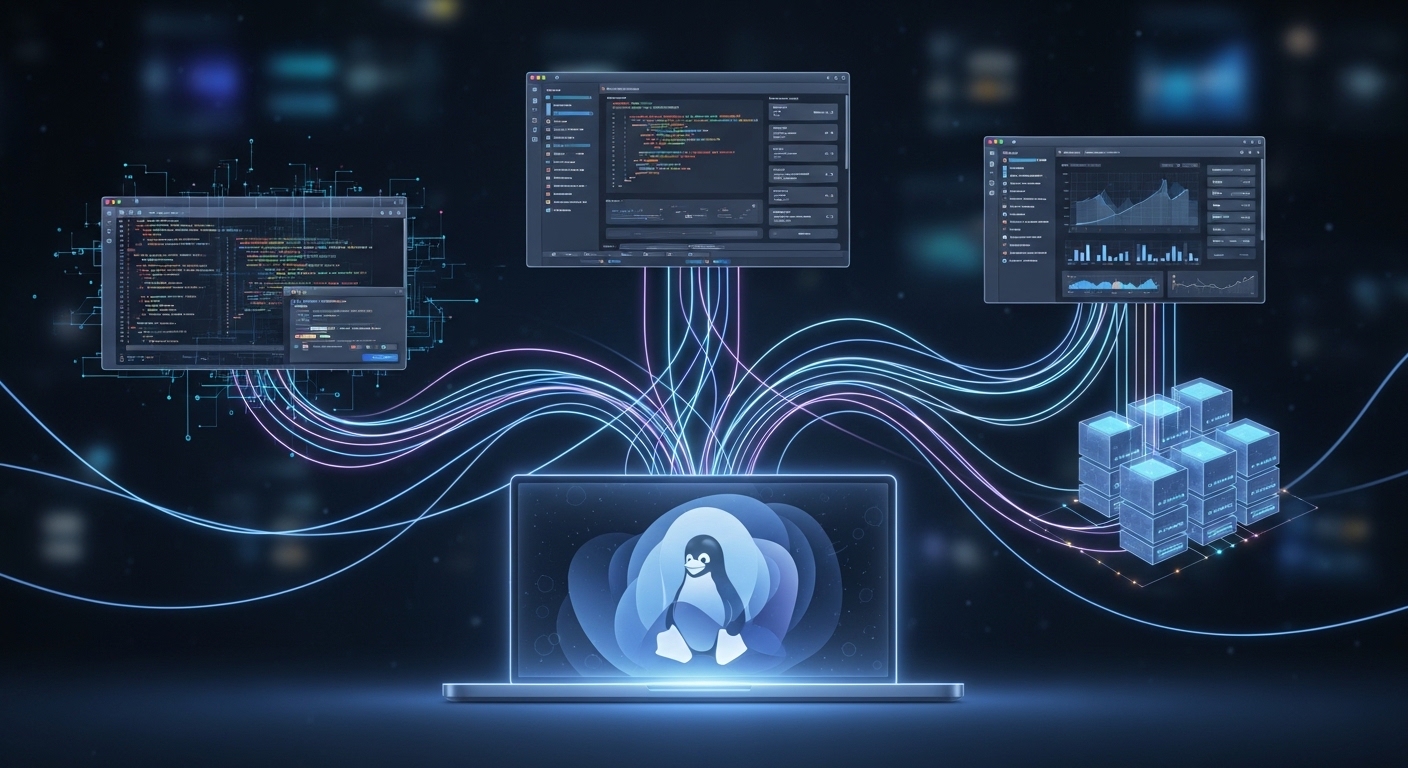
GhostLock (CVE-2026-43499) is a stack use-after-free in the futex/rtmutex PI rollback path, present from Linux 2.6.39 through 7.1-rc1 and fixed in 7.1, that lets any unprivileged user escalate to root and escape containers on kernels built with CONFIG_FUTEX_PI. The exploit reliably turns a dangling waiter on the kernel stack into a controlled write and function-table hijack, bypasses KASLR via a prefetch side channel, and triggers code execution via inet6_protos[UDP]. Operators should move to vendor kernels carrying the April–May 2026 backports (or Linux 7.1), with priority on multi-tenant hosts, CI runners, and Kubernetes nodes.
Security, Privacy, and Platform Risk
Grok Build CLI uploads entire repos, including secrets, to Google Cloud Storage
Around the web •July 12, 2026
Wire-level analysis of Grok Build CLI 0.2.93 finds it transmits file contents it reads—including .env secrets—via POST /v1/responses and persists session archives plus a whole-repo snapshot to Google Cloud Storage (gs://grok-code-session-traces) through /v1/storage. Tests verified multi-GB transfers and, on upgraded accounts, a git bundle containing unread files and full git history; uploads continued despite model rate limits and with “Improve the model” turned off. For developers, this means any workspace run with the CLI may be exfiltrated and retained, warranting strict secret hygiene and repo scoping.
GhostLock: 15-Year Linux Kernel Bug Enables Root, Container Escapes
Around the web •July 8, 2026
GhostLock (CVE-2026-43499) is a stack use-after-free in the futex/rtmutex PI rollback path, present from Linux 2.6.39 through 7.1-rc1 and fixed in 7.1, that lets any unprivileged user escalate to root and escape containers on kernels built with CONFIG_FUTEX_PI. The exploit reliably turns a dangling waiter on the kernel stack into a controlled write and function-table hijack, bypasses KASLR via a prefetch side channel, and triggers code execution via inet6_protos[UDP]. Operators should move to vendor kernels carrying the April–May 2026 backports (or Linux 7.1), with priority on multi-tenant hosts, CI runners, and Kubernetes nodes.
Build Trustworthy Site Chatbots: Handoff, Flexibility, Proactivity, Emotion, Transparency
Nielsen Norman Group •July 10, 2026
This piece distills five traits of effective site-specific AI chatbots—handoff willingness, flexibility, proactivity, emotional responsiveness, and transparency—into concrete design patterns. Recommendations include handling adjacent questions, progressive error repair with clarifying choices, scannable next-step suggestions with direct links, honest capability/identity disclosure (required in the EU from Aug 2026), and inline explanations for data requests. Teams can use these guidelines to boost task completion, reduce unnecessary escalations, and align with compliance and brand trust goals.
Designing AI Products Users Trust
Designing for Intent: Chat, Voice, and Agentic UX in 2026
UX Design •July 12, 2026
UX is moving beyond screens to three AI-driven modes: chat for ambiguous intent, voice that requires low-latency, context-preserving conversations (e.g., Apple’s 2026 Siri AI), and agentic systems that act for users. The piece urges hybrid interfaces keyed to intent clarity, voice stacks engineered for sub‑second latency and memory, and agent UX that bakes in explainability, logs, and overrides; Gartner expects 40% of enterprise apps to ship task‑specific agents by 2026. Generative UI patterns and trust signals (streaming output, stop controls, citations) reshape how designers and developers architect systems.
Diagnose and Grow Your Design System Across Six Dimensions
Nielsen Norman Group •July 10, 2026
This piece introduces a six-dimension design-system maturity model—organizational alignment, team effectiveness, infrastructure robustness, governance, support, and adoption—to replace linear stage thinking. Teams independently score each dimension on a 1–5 scale, reconcile differences across roles, and plot a radar profile to expose bottlenecks, trade-offs, and misaligned expectations. The framework helps engineering, product, and design prioritize where to invest next and sustain adoption through organizational change.
Five-Point UX Framework To Boost Retention In Mental Health Apps
Smashing Magazine •July 9, 2026
Mental health apps see extreme 30-day churn (≈95% abandon; median retention 3.3%), often because trend-driven UI adds cognitive friction when users have the least capacity. The article proposes a five-point framework—cognitive load, emotional alignment, navigational reliability, accessibility (WCAG 2.2 contrast 4.5:1; ≥24×24 targets), and engagement integrity—to evaluate any visual or interaction trend. For builders: favor predictable flows, visible controls (no gesture-only), voice/single-action paths, calm tone, and non-coercive mechanics, asking of every design choice, “Does this lower the cost of use when it matters most?”
AI Infrastructure, Performance, and Business
Ploy unlocks 2.2x speed, 27% savings migrating to GPT-5.6
Around the web •July 12, 2026
Ploy migrated its production agent from Claude Opus 4.8 to GPT-5.6, delivering 2.2x faster builds, 27% lower cost, roughly half the output tokens, and higher visual scores. The wins came from fixing model-biased eval harness issues, transforming OpenAI tool-call schemas so optional params are required-but-nullable to stop invented defaults, and rebuilding prompt caching with explicit breakpoints and per‑workspace keys to regain 80%+ first-call hits and cut uncached tokens 28%. They also set store:false to avoid server-side reasoning replay errors—underscoring that configuration can outweigh list pricing in real-world cost and performance.
Satirical 'LARP' maps AI vendor-financing loops across NVIDIA, OpenAI, Oracle
Around the web •July 12, 2026
LARP is a satirical "revenue infrastructure" that parodies round-tripping and, using sourced real-world examples, spotlights the legal circular financing shaping AI infrastructure. It maps commitments like NVIDIA’s up-to-$100B "invitation" to OpenAI, OpenAI’s ~$300B Oracle and ~$250B Microsoft cloud deals, AMD warrants for up to ~10% tied to 6 GW deployments, and NVIDIA’s $6.3B CoreWeave capacity purchase. For tech leaders, the takeaway is to look past headline ARR or demand to actual cash flows, obligations, and ASC 606 timing, since these loops can legally amplify optics without near-term unit economics.